
Elicit
AI research assistant that searches 125M+ papers and extracts data into systematic reviews.
About Elicit
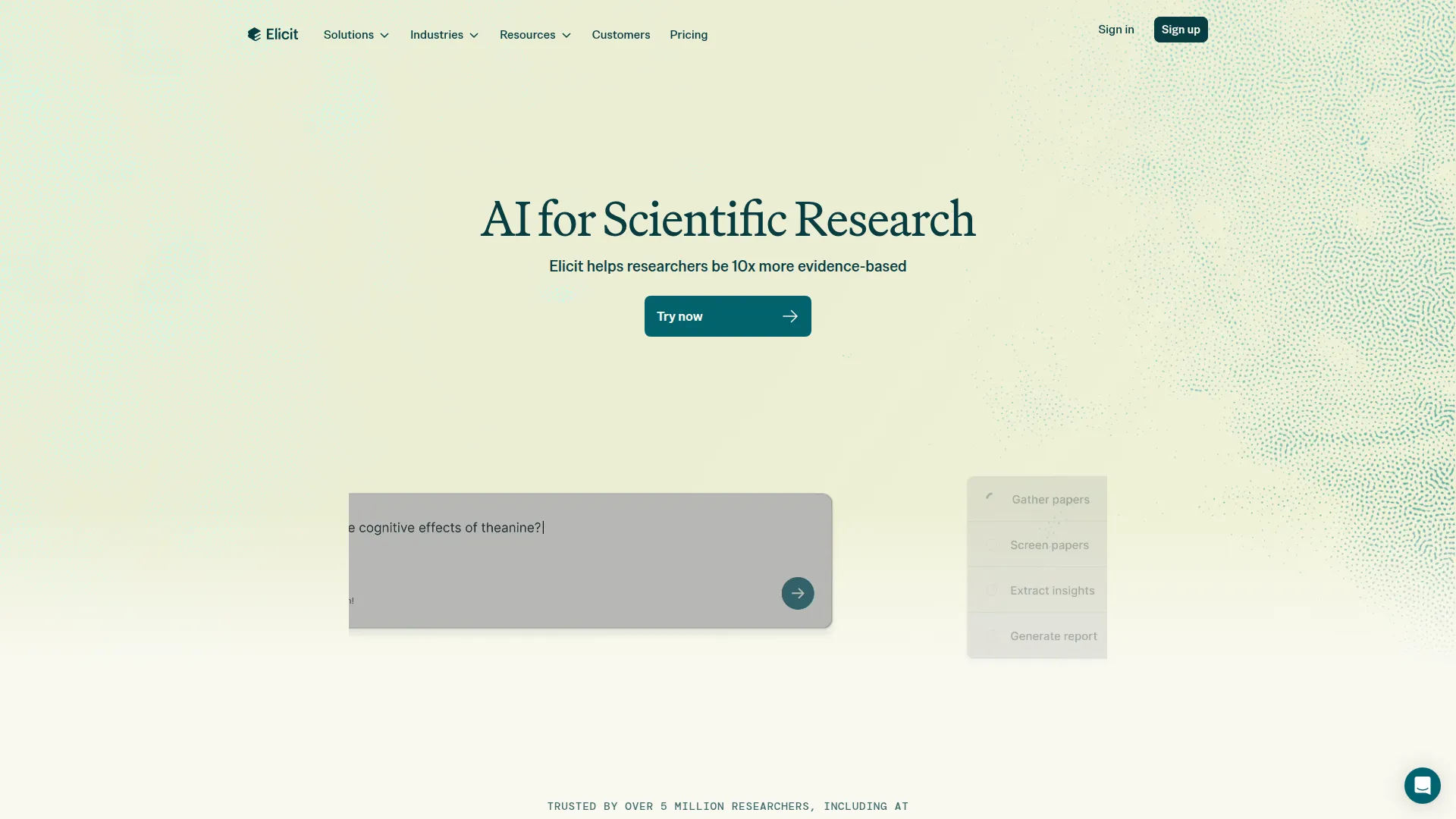
Elicit is an AI research tool built specifically for navigating the scientific literature. It searches across 125 million academic papers and uses AI to extract structured information from them, transforming the labor-intensive process of literature review into something that can be accomplished in hours rather than weeks.
The core workflow: pose a research question, and Elicit finds the most relevant papers, then extracts key information into a structured table — study design, population size, intervention type, outcome measures, and conclusions — across all of them simultaneously. This structured extraction is what makes Elicit genuinely different from AI-assisted web search: you’re working with actual research data organized for comparison, not summaries of summaries.
For systematic reviews and meta-analyses, Elicit handles the screening phase that typically requires weeks of manual work by two independent researchers. It applies your inclusion and exclusion criteria across thousands of papers and presents borderline cases for human review, dramatically compressing the most labor-intensive phase of evidence synthesis.
The Notebook feature lets you organize papers into collections, apply consistent extraction schemas, export structured data to Excel or CSV for further analysis, and generate literature review drafts from your curated paper set.
Elicit’s accuracy relies on models trained specifically for scientific literature, including the ability to distinguish between a paper’s claimed findings and the actual strength of evidence. This makes it more reliable for research use than general-purpose AI tools that may conflate correlation and causation or miss statistical limitations.
Elicit Basic is free for up to 12 papers per query. Plus ($10/month) extends to 1,000 papers per search with full extraction tables and export capabilities.
Screenshots
Key Features
- Semantic paper search Find studies by meaning, not keywords.
- Data extraction Pull methods, results and samples into tables.
- Systematic reviews Screen hundreds of papers in hours.
Use Cases
- Literature reviews
- Evidence synthesis
- Research scoping
Pros
- Purpose-built for real research
- Transparent, citable extractions
- Big time savings
Cons
- Best in empirical domains
- Complex extractions need checking