
About Consensus
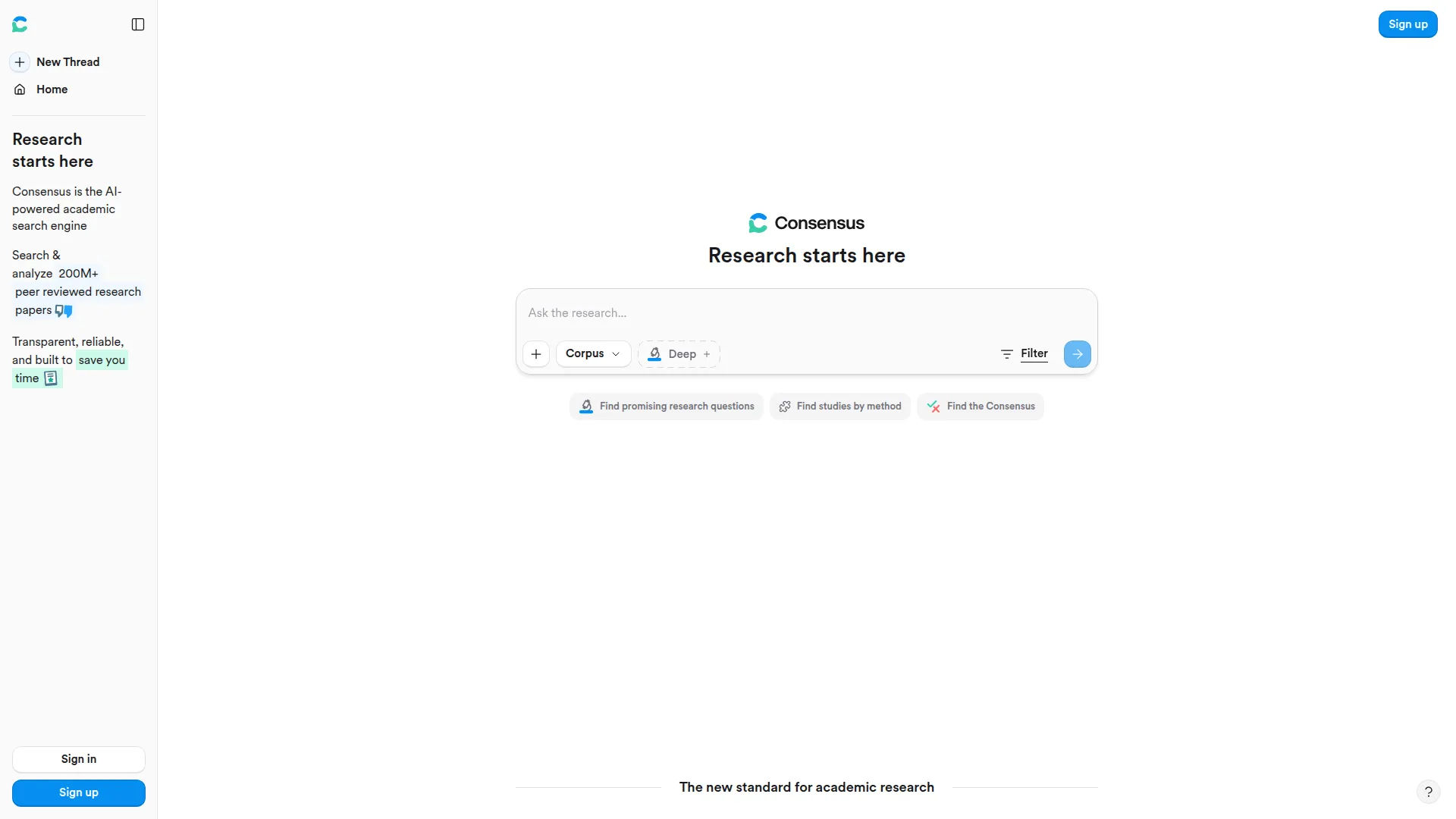
Consensus is a scientific search engine that finds research papers relevant to your question and synthesizes what the evidence actually says, cutting through information noise to give you evidence-based answers grounded in real studies rather than opinion.
The key experience is search-to-synthesis: type a question like “does intermittent fasting improve metabolic health?” and Consensus returns a collection of relevant papers alongside a Consensus Meter showing what percentage of the research supports, is neutral, or contradicts the claim. The GPT-4-powered Synthesis feature produces a concise natural language summary of the evidence across all relevant papers, saving the time of reading individual abstracts.
For students, researchers, marketers, health professionals, and knowledge workers who need to understand what science says on a topic, Consensus provides direct access to the primary literature rather than journalistic interpretations of it. Every claim is traceable to its source paper with a direct link to the abstract and available full text.
Advanced search filters let you narrow by study type (randomized controlled trial, meta-analysis, observational study), publication year, and journal. The Citation Exporter makes it easy to bring papers into reference managers. For users conducting academic research, Copilot features help organize findings across multiple searches into a coherent literature overview.
Consensus searches Semantic Scholar’s 200 million paper database, covering biomedical science, social science, economics, computer science, and other fields.
Consensus Free provides 20 searches/month. Premium ($9.99/month) offers unlimited searches, Consensus Meter, AI Synthesis, and study type filtering.
Screenshots
Key Features
- Consensus meter See agreement across studies at a glance.
- Study snapshots Key findings, sample sizes and methods.
- Quality indicators Journal rank and citation signals.
Use Cases
- Evidence-based answers
- Health and nutrition research
- Academic writing support
Pros
- Answers grounded in real papers
- Great for non-academics too
- Clear quality signals
Cons
- Coverage varies by field
- Nuance can get compressed