Too Dangerous to Sell? The Curious Marketing Genius Behind Fable and Mythos
How a limited release, a countdown timer, and a sudden shutdown turned an experimental AI model into one of the most talked-about products of the year.
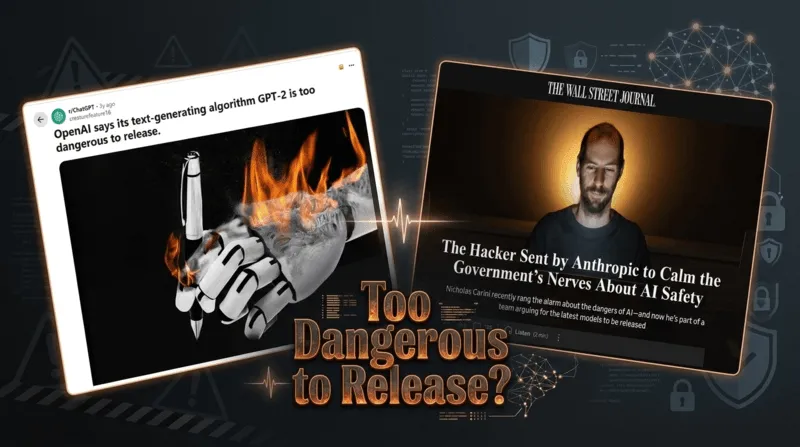
Anthropic says it was about safety. Skeptics say it was the most effective product launch of the year.
A week ago, four people were sitting around a table arguing about the future of Mythos.
Three of them were convinced it was over.
One was scrolling through social media posts mourning Fable’s disappearance as if it were a fallen celebrity. Another confidently explained that regulators had stepped in, the model had been pulled early, and there was no realistic path back. The third simply nodded and refilled everyone’s glasses.
Only one person in the room made a different prediction:
Fable would return.
Not eventually.
Soon.
At the time of writing, that prediction remains technically unproven. Fable and Mythos are still unavailable after Anthropic suspended access following U.S. government restrictions tied to alleged jailbreak concerns. Anthropic itself has publicly stated that it expects access to be restored and continues to challenge the rationale behind the shutdown.
But the more interesting question is not whether Fable returns.
It’s why so many people suddenly care.
The Story Everyone Was Sold
The narrative arrived in three acts.
Act One:
A model so powerful and potentially dangerous that it couldn’t be released publicly.
Not “we’re still testing.”
Not “we need more evaluation.”
Instead, something much more dramatic.
The implication was clear: Anthropic had created something extraordinary and decided it was too risky for general availability.
Act Two:
The model appeared anyway.
Sort of.
A limited version called Fable was made available under controlled conditions. Access was temporary. There was a deadline. Users were told they had only a short window to experience it.
Suddenly, trying Fable felt urgent.
Act Three:
The model disappeared.
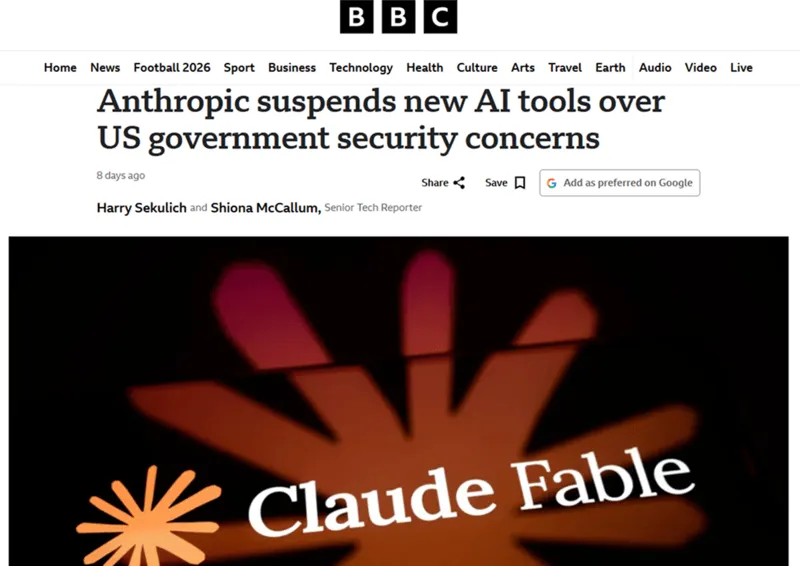
Government restrictions arrived. Anthropic shut down both Fable and Mythos worldwide after receiving an export-control directive related to national security concerns and a reported jailbreak vulnerability.
A powerful model.
A limited release.
A ticking clock.
A dramatic shutdown.
If that sounds suspiciously like a Hollywood screenplay, that’s because human psychology has always loved scarcity.
GPT-2 Did This First
Anyone who has been around AI long enough has seen this movie before.
Back in 2019, OpenAI introduced GPT-2 and announced that the largest version would not initially be released because it was considered potentially dangerous.
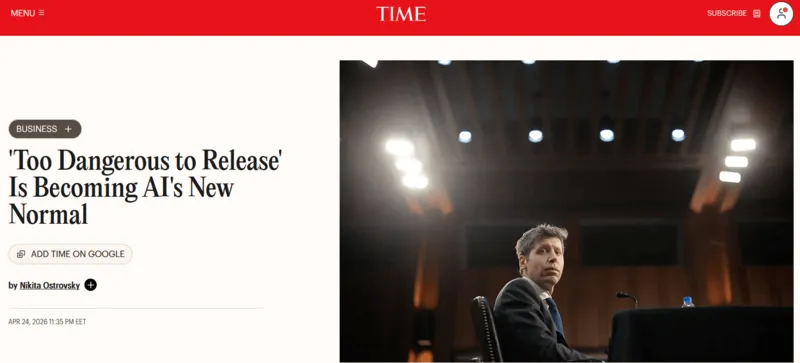
Headlines exploded.
The phrase “too dangerous to release” appeared everywhere.
The result?
Millions of people who had never heard of language models suddenly knew exactly what GPT-2 was.
Eventually the full model was released.
Civilization survived.
The hype remained.
The lesson was simple.
Sometimes the most effective way to make people want a product is to tell them they can’t have it.
The Psychology Is Older Than AI
Robert Cialdini’s work on influence remains one of the most cited explanations for this behavior.
His scarcity principle can be summarized in a single sentence:
“Scarcity increases perceived value.”
People consistently rate identical things as more desirable when access becomes limited.
The object itself doesn’t change.
Only its availability changes.
Yet the perceived value rises.
This effect has been demonstrated repeatedly in psychology research for decades.
One famous experiment gave participants identical cookies.
The cookies placed in nearly empty jars were rated as more valuable than cookies from full jars.
Nothing about the cookies changed.
Only the supply changed.
Fable may be the most expensive cookie jar in history.
Scarcity Was Only Layer One
What happened with Fable went beyond simple scarcity.
Users didn’t merely lose access to something they wanted.
They lost access to something they already had.
That distinction matters.
Psychologists call this reactance.
When people believe a freedom has been removed, their desire for the forbidden option often increases dramatically.
The model wasn’t simply unavailable.
It was taken away.
That creates a far stronger emotional reaction.
Then there was the deadline.
Deadlines activate another psychological mechanism: loss aversion.
Research by Daniel Kahneman and Amos Tversky consistently found that people experience losses much more intensely than equivalent gains.
“Try this amazing thing.”
works.
But:
“Try it before it disappears forever.”
works much better.
The combination is almost unfair.
Scarcity.
Reactance.
Loss aversion.
Stack all three together and demand becomes self-sustaining.
The Convenient Villain
The most elegant part of the story may be the regulatory intervention itself.
Because whether the restrictions were fully justified or not isn’t actually the marketing question.
The marketing question is simpler:
Who gets blamed?
When a company creates scarcity intentionally, customers may feel manipulated.
When a regulator creates scarcity, customers often blame the regulator instead.
The scarcity remains.
The desire remains.
The company keeps the attention.
And responsibility appears to move elsewhere.
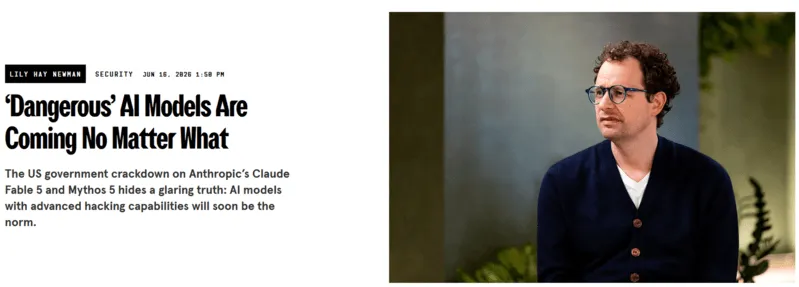
Anthropic publicly argued that the reported vulnerabilities were narrow and comparable to capabilities available in other frontier models. The U.S. government disagreed and imposed restrictions anyway.
Regardless of who is correct, the outcome is the same.
Everyone is talking about Fable.
The Most Valuable AI Model Is the One Nobody Can Use
This pattern exists everywhere.
Booking.com warns that only two rooms remain.
Luxury brands release limited drops.
Sneaker companies manufacture artificial shortages.
Clubhouse spent years growing almost entirely through invitation scarcity.
The formula is ancient.
Make something harder to obtain.
Watch people want it more.
The AI industry didn’t invent this.
It merely upgraded it.
So Will Fable Return?
Probably.
Not because of secret information.
Not because of leaked roadmaps.
Because it would be strange to spend months building one of the most effective anticipation engines in recent AI history and then permanently abandon it.
Anthropic itself has signaled confidence that access may eventually be restored. Reports from company executives have suggested the shutdown could be temporary rather than permanent.
Maybe it returns as Fable.
Maybe it returns as Mythos.
Maybe it returns under an entirely different name with updated safeguards and a carefully crafted announcement about newly addressed risks.
But products are rarely surrounded by this much attention by accident.
Especially when everyone keeps talking about them after they’re gone.
The irony is that Fable’s most impressive capability may not be coding, reasoning, or autonomous problem-solving.
It may be its ability to generate demand while offline.