The 2026 AI SaaS Stack: Why We Chose Astro Over Next.js
Astro, TypeScript, PostgreSQL, and Drizzle ORM turned out to be the fastest way to build modern AI products in 2026.
Most AI startups don’t fail because of bad ideas.
They fail because they spend months building infrastructure before users ever see the product.
Authentication. Databases. SEO. Billing. Search. Admin panels. Content systems. Analytics.
Before you know it, you’ve spent three months building a foundation and exactly zero days talking to customers.
After building multiple AI products, wrappers, directories, content sites, and internal tools, we eventually stopped chasing trends and settled on a stack that consistently helped us launch faster than anything else we tried.
Surprisingly, the foundation wasn’t Next.js.
It was Astro.
And after a year of production usage, we have no plans to go back.
The Problem With Modern AI SaaS Development
Most founders start with a familiar stack: Next.js, React, Prisma, Tailwind, and PostgreSQL.
There is nothing wrong with this setup. The problem appears six months later.
Your marketing pages become slower. SEO becomes harder. You ship client-side JavaScript to pages that don’t need it. Every page becomes a React application whether it needs React or not.
For AI products, that’s often unnecessary. Most AI startups have three very different workloads:
- Marketing pages
- Blog content
- Interactive application
Traditional React frameworks treat everything as an application. Astro treats everything as content first. That distinction matters.
Why Astro Became Our Default Choice
Astro ships zero JavaScript by default.
Read that again. Zero. Not reduced. Not optimized. Not lazy-loaded. Zero.
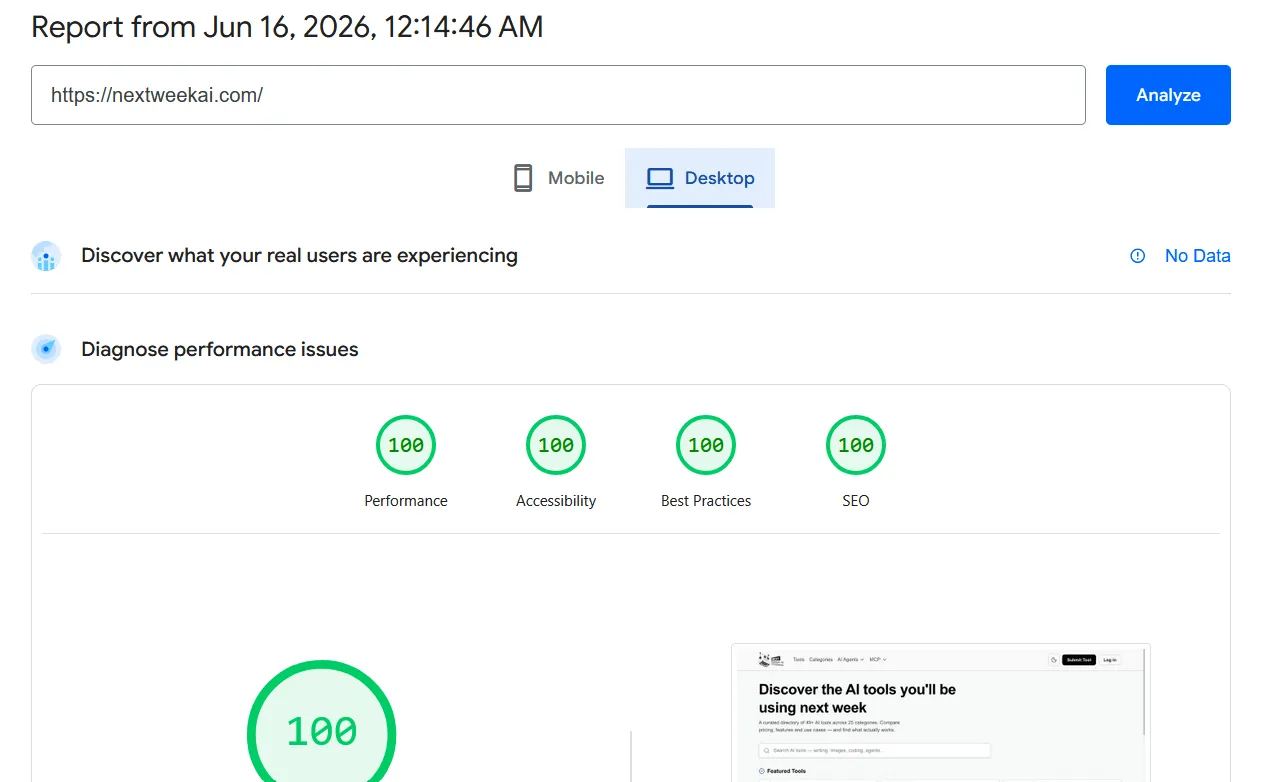
A typical landing page generated by Astro can deliver Lighthouse scores in the high 90s before any optimization effort.
✅ Pros
- +Zero JS by default — Lighthouse 95+ out of the box
- +Works with any UI framework (React, Vue, Svelte) via islands
- +Built-in MDX, image optimization, and static generation
- +Cloudflare Pages deploys in under 60 seconds
- +Content Collections with TypeScript schemas
❌ Cons
- –Smaller ecosystem than Next.js
- –Islands architecture has a learning curve
- –Less suited for heavy client-side apps
The Architecture We Use
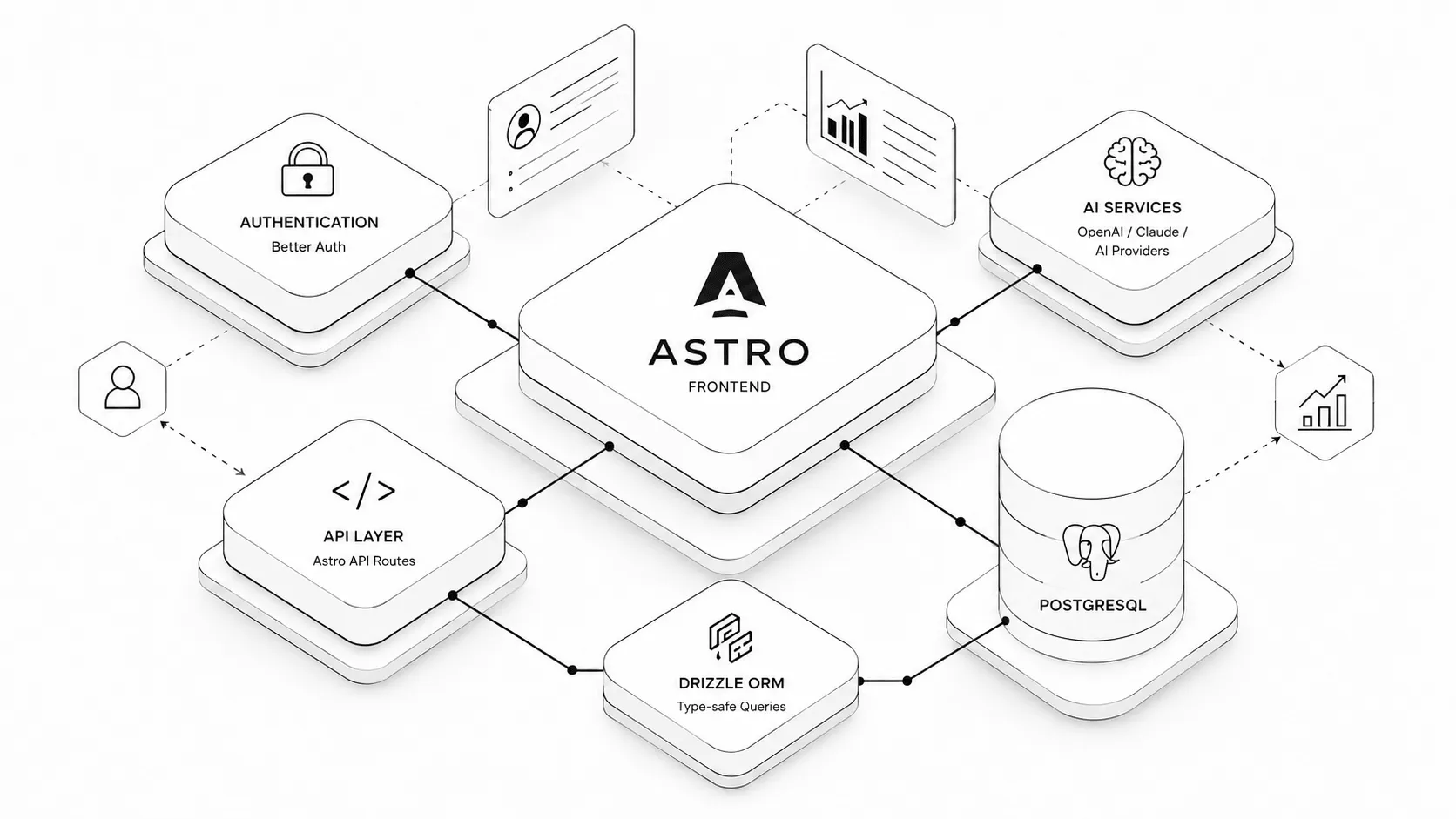
Our typical AI SaaS architecture looks like this:
| Layer | Tool | Why |
|---|---|---|
| Frontend | Astro + TypeScript | Zero JS, Content Collections, MDX |
| Styling | Tailwind CSS | Utility-first, purged CSS, design tokens |
| Database | PostgreSQL via Neon | Full-text search, JSON, no extra services |
| ORM | Drizzle ORM | Type-safe, SQL-like, no code gen |
| Auth | Better Auth | OAuth + email, session management |
| Hosting | Cloudflare Pages | Global edge, zero cold starts |
| Resend | Developer-first, React Email templates | |
| Analytics | Umami | Privacy-first, no cookie banner needed |
This stack is intentionally boring. Boring wins.
Why We Chose Drizzle Instead of Prisma
Prisma remains a fantastic tool. But Drizzle ORM offers something we increasingly value: control.
A table definition looks like actual SQL:
import { pgTable, text, timestamp, serial } from 'drizzle-orm/pg-core';

export const aiTools = pgTable('ai_tools', {
  id: serial('id').primaryKey(),
  name: text('name').notNull(),
  slug: text('slug').notNull(),
  createdAt: timestamp('created_at').defaultNow(),
});
No code generation. No giant client. No hidden abstractions. What you write is close to what the database executes.
PostgreSQL Is Still the Best Database Choice
Every year a new database becomes fashionable. Every year we continue using PostgreSQL.
It already solves almost everything: full-text search, JSON storage, indexing, replication, analytics queries, and extensions. For an AI directory, Postgres is often enough to power tool search, categories, tags, user collections, reviews, and favorites — without introducing additional infrastructure.
The fewer moving pieces you have, the faster you can ship.
Building Search Without Elasticsearch
One of the biggest surprises was how far PostgreSQL full-text search has evolved. Many founders immediately reach for Elasticsearch, Meilisearch, or Typesense — but for most directories, Postgres handles it perfectly well:
SELECT * FROM ai_tools WHERE
	to_tsvector('english', name || ' ' || description)
@@ plainto_tsquery('ai coding');
Simple. Fast. Reliable. And one less service to maintain.
SEO Is the Biggest Growth Lever
Most AI startups obsess over features. We obsess over pages.
A single well-ranked page can generate traffic for years. When building an AI directory, SEO is not a marketing channel — SEO is the product.
Our content architecture includes: tool pages, category pages, alternative pages, comparison pages, blog posts, and programmatic SEO pages. Astro makes this workflow incredibly efficient because static generation is the default behavior — faster crawling, better indexing, lower server load. Exactly what Google wants.
The Secret Weapon: MDX
Many teams separate their CMS, marketing site, documentation, and blog into different systems. We increasingly merge them.
MDX allows developers and content creators to work in the same system. A blog post can contain React components, charts, interactive demos, and code examples — without introducing unnecessary complexity. This dramatically reduces maintenance costs.
Better Auth Is Changing Authentication
Authentication used to be one of the most annoying parts of launching a SaaS. Today, Better Auth solves most of that pain.
Typical setup:
export const auth = betterAuth({
  emailAndPassword: {
    enabled: true,
  },
  socialProviders: {
    github: {},
    google: {},
  },
});
Done. No custom authentication system. No JWT debugging sessions at 2 AM. No unnecessary complexity.
What We’d Build Today
If we were launching a new AI startup tomorrow, we would start with Astro, TypeScript, Tailwind, PostgreSQL, Drizzle ORM, Better Auth, Resend, and Cloudflare Pages.
And nothing else. No microservices. No Kubernetes. No distributed architecture. No trendy infrastructure.
Just enough technology to reach product-market fit. Because users don’t care how sophisticated your architecture is. They care whether your product solves a problem.
Final Thoughts
The biggest lesson we’ve learned after building AI products is that simplicity compounds.
Every dependency adds maintenance. Every service adds operational overhead. Every abstraction eventually leaks.
The stack above isn’t exciting. That’s exactly why it works.
It allows small teams to move quickly, ship often, and focus on the only thing that ultimately matters: building products people actually want to use.
And yes — this is the same architecture that powers NextWeekAI, our AI tools discovery platform.